In the latest Together magazine, which highlighted the rich heritage of SIM NZ, you may have come across the story of Heather Simpson and her years of service in South America. This article shares the remarkable account of an HIV and AIDS ministry that Heather, together with a dedicated team, helped establish in the heart of Ecuador.
“Agustin was so grateful that he talked often about leaving his house for us so that others like him would have somewhere to live, and caring people to keep an eye on them.”
In 1995 our team in Guayaquil, Ecuador asked the question, “What’s happening with HIV and AIDS? Is anyone, especially Christian organisations, doing anything?”
The quick answer: there was very little happening, and there were no Christian groups involved in HIV and AIDS ministry. Rosita became quite passionate about this ministry area and was soon our HIV and AIDS point person. We joined her as we learned, developed, walked alongside and provided care and help for many people who were despised and rejected. We were embraced by them, learned from them, watched them grow ill and die, while supporting their families.
By 2002 we formed a legal Foundation called La Fundacion Agustin Tomala. Many people wonder who Agustin was, so here’s a brief story.
It was a privilege to meet many people from all walks of life infected and affected by HIV and AIDS. Toward the late 1990s we started walking alongside Agustin. He was Rosita’s relative, in his forties, and pretty much alone as his mother had died. Agustin was an accountant with three university degrees and had been marginally involved in churches. He had been heavily influenced by some colleagues and became involved in a series of relationships. It was only after the death of one of his ex-partners that he plucked up the courage to talk to Rosita. He had a blood test done – which, unfortunately for him, was HIV positive.
It is common with HIV people that they feel isolated and very aware of their mortality, which increases with a variety of illnesses against which they have minimal defence. Agustin was typical in that he had a lot of diarrhoea, respiratory conditions and lost weight. He also went blind. This meant he could no longer work, leading to extreme isolation.
As a team, we decided that we would take care of Agustin, so one of the boys would collect him most days and bring him to our office. He didn’t do much, but one or the other of us took him out for a walk, and we always had midday meals together. We were also able to share the Good News with him, and his faith grew. We were able to connect him with a Bible Study group close to his home. We took him to his doctor and hospital visits, sat with him when he was unwell, paid for his medicines (which were very expensive), and we all learned what it was like to care for someone infected with HIV.
Agustin was so grateful that he talked often about leaving his house for us so that others like him would have somewhere to live, and caring people to keep an eye on them. He asked us to organise a lawyer so he could take action on this, and we made an appointment for a particular day and time. Agustin became quite ill and ended up in hospital, but was still (relatively) quite well, so we did expect him to come home again. However, he asked that we not cancel the lawyer’s appointment, and meet at the hospital, so that’s what we arranged. At 5 am on the day we were to meet with the lawyer, Rosita received a call from the hospital to say that Agustin had died.
Unfortunately, the use of his house for HIV and AIDS care never came to anything. We realised that Agustin’s vision was not contingent on a house. Rather, he wished that care and company would be available to people like him. As we were nearly ready to present the legal papers for our HIV/AIDS Foundation, we decided that we would carry his vision into the future by naming the Foundation after him – La Fundacion Agustin Tomala.
The Foundation has been a haven for many people, including through the Covid pandemic. The Support Group which meets fortnightly is life-giving. They connect with local churches. A church group continues visiting the children’s hospital. The Foundation Team (all volunteers) help with skills development and education, food parcels, home and community visits, and medicines. Bible Study is the central most important activity. Many have come to faith through the Foundation.
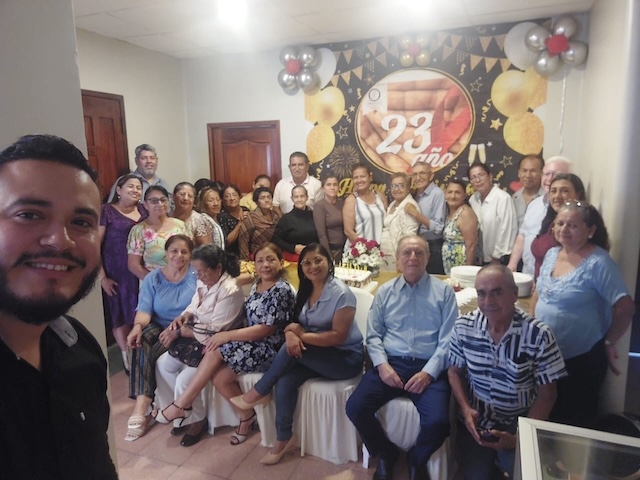
At the end of 2025, the Foundation has celebrated 23 years of existence, carrying on telling The Story and providing all sorts of pathways to have a life and death of dignity in the face of serious illness and rejection by family and society.
Pray for:
- the health of both the members of the support group and the volunteers.
- new people who attend, that they may come to know Christ in spirit and in truth.
- we continue trusting in God’s faithfulness.
- continued medical support.
If you would like to learn more about supporting the Foundation, contact us today.